
Three Macaws Rescued from Severe Neglect
Safe at last—but their fight to heal has only begun.
Emergency rescues arrive without warning, and expert care cannot wait. The Georgia Aviary stands ready to support parrots in crisis. Community support is crucial for our organization to provide avian veterinary treatment, medication, recovery formula, daily monitoring, safe housing and custom accommodations. Every gift helps us give these birds and the next parrot in crisis, the chance they deserve. Please donate today or consider recurring financial donations to help the Georgia Aviary.
AT A GLANCE: Three female macaws were rescued from severely unsanitary conditions during a North Georgia animal seizure. One had resorted to severe self-mutilation, leaving extensive feather loss. The smallest arrived dangerously underweight, unable to use either foot normally and needing intensive nutritional and medical support. Her recovery remains uncertain. They are safe now, but safety was only the first step, we need help giving them every possible chance to heal.
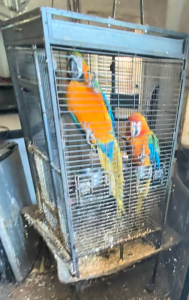
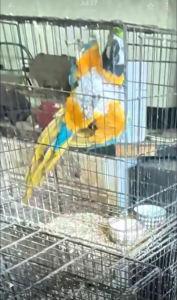
What Rescuers Found
- The residence was severely unsanitary, with overwhelming ammonia fumes that remained unbearable even while rescuers wore N95 masks.
- All three macaws arrived visibly filthy, with overgrown nails. Although they have received multiple baths since rescue, a persistent foul ammonia odor remains in their feathers; regular bathing is still needed to help diminish it.
- The macaws were confined in cages far too small for birds of their size. The cages provided no meaningful opportunity to perch, climb, exercise or engage with enrichment. The larger and smaller hybrid macaws were housed together; the Blue-and-yellow macaw was in a separate cage.
- Food and water were nearly nonexistent and heavily contaminated. The containers appeared to have been repeatedly filled rather than emptied and cleaned.
- Eighteen very large dogs were also present in crates. The Georgia Aviary was responsible only for removing and caring for the three macaws.
- An on-site veterinarian could provide only a visual inspection because the environment was not suitable for a complete examination.
The Three Macaws
| Blue-and-yellow Macaw - Female | Arrived visibly filthy with overgrown nails, extensive feather loss from severe self-mutilation, and a markedly overgrown beak. | Her overgrown beak has been corrected by the avian veterinarian. She is eating, active and seeking human contact, but recovery from the self-mutilation will require continued safety, enrichment and close monitoring. |
| Large Hybrid Macaw - Female | Arrived visibly filthy with overgrown nails. She was confined with the much smaller, disabled hybrid in a cage far too small for either bird; in our care, she has shown an extreme fear response to large dogs. | Eating well and active. Cautious about stepping up, but approaches the cage side and shows no aggression. |
| Small Hybrid Macaw - Female | Arrived visibly filthy with overgrown nails, only 700 g, markedly underweight, with severe impairment affecting both feet and a heart murmur noted on her initial exam. Housed with a larger, able-bodied macaw where almost no usable food was available, she may have been unable to compete for enough food. | She eagerly accepts recovery formula and pellets, but she remains fragile and her outcome is still uncertain. She needs medication, daily weights, nutritional support and custom accommodations every day. |
Weights shown are from the initial veterinary examination unless otherwise stated. A single weight does not establish a trend; the smaller hybrid is weighed every morning before food so changes can be compared consistently.
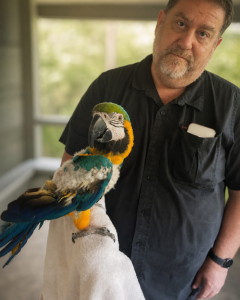
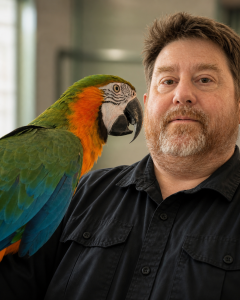
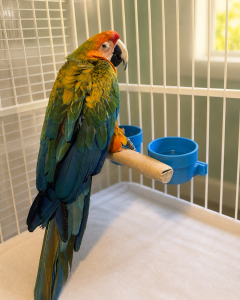
Smaller Hybrid Macaw: Intensive Rehabilitation
- The smaller hybrid does not use the right foot. The left foot has limited gripping ability; she uses her beak and left nails to hook onto cage bars when climbing.
- Because she cannot perch normally, her enclosure, perches and handling are adapted for safety and comfort.
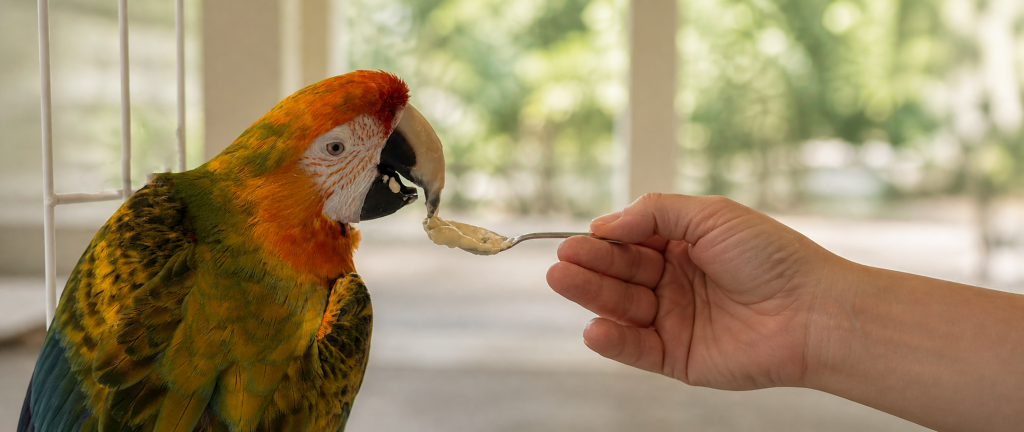
- Veterinarian-prescribed medication is mixed into recovery formula because direct syringe medication is not reliably accepted. The medicated formula is consumed completely.
- Her nutrition plan includes Harrison’s Recovery Formula and pellets. The veterinarian’s estimated target weight is approximately 800–900 g, with gradual weekly gain as the goal.
- A heart murmur was noted during the initial examination. Follow-up remains under the direction of the avian veterinarian.
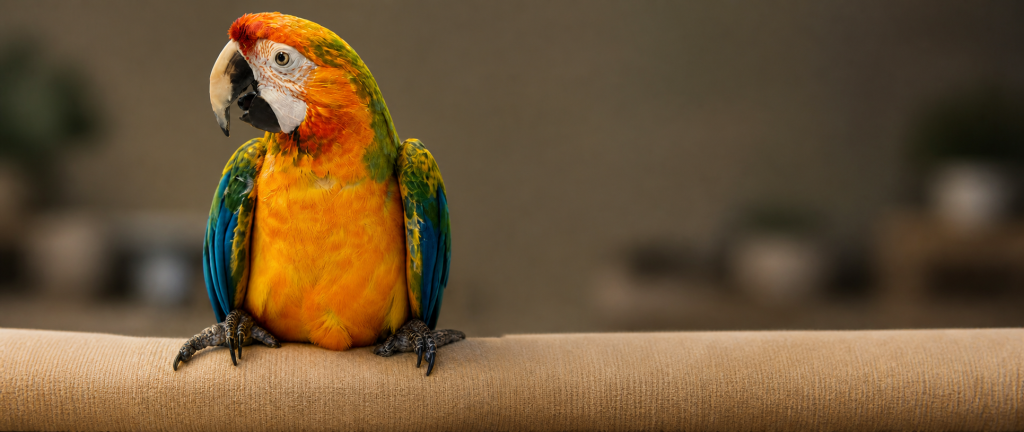
Encouraging Behavior
- They are eating, and that gives us hope—but eating well does not mean the crisis is over.
- The smaller hybrid accepts recovery formula and pellets and is more alert, but she still cannot perch normally and needs intensive support every day.
- The Blue-and-yellow seeks human contact despite the severe self-mutilation she endured. The larger hybrid remains cautious, but she is beginning to approach caregivers calmly.
Their Rescue Was Only the Beginning
These three macaws survived conditions no parrot should ever endure. Now the smallest is fighting to regain strength while learning to live with profound damage to both feet, and the Blue-and-yellow is beginning to heal from the distress that led her to mutilate her own feathers.
Emergency rescues arrive without warning, and expert care cannot wait. Community support is crucial in order to provide avian veterinary treatment, medication, recovery formula, daily monitoring, safe housing and custom accommodations. Every gift helps us give these birds—and the next parrot in crisis—the chance they deserve.
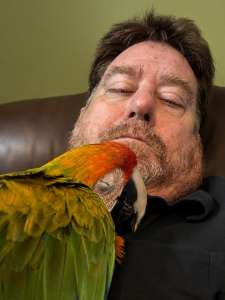
Veterinary Care and Monitoring
Each bird received a comprehensive avian examination at For Pet’s Sake Animal Hospital, whose avian expertise makes this specialized care possible. All disease-screening tests ordered by the treating avian veterinarian returned negative. That is welcome news, but it does not erase the harm these birds have already endured.
The Blue-and-yellow must recover from severe self-mutilation and extensive feather loss. The smaller hybrid requires daily pre-feeding weights, pain medication and antibiotics, nutritional support and close monitoring of her appetite, droppings, mobility and comfort. Her willingness to eat gives us hope, but her condition remains fragile and her future is still uncertain.
Investigation Note
The Georgia Department of Agriculture Law Enforcement Division is leading the ongoing investigation. To protect that investigation and honor the requests of the agencies involved, The Georgia Aviary will not identify any person, address, municipality or specific county associated with the seizure. Public updates will remain focused on verified information about the birds, their care and their recovery.
FAQ
Where did this happen?
North Georgia. No more specific location will be released.
What did disease screening show?
All disease-screening tests ordered by the treating avian veterinarian returned negative. The birds remain in quarantine under standard intake procedures.
Are the birds available for adoption?
Right now, our only focus is helping these birds heal. Any decisions about their futures will be made later, based entirely on what is best for each bird.
Will the smaller hybrid macaw recover?
We do not know yet. She arrived dangerously thin and with severe damage affecting both feet. Her appetite and growing alertness give us hope, but her condition remains fragile. We are committed to doing everything we can to give her a chance.
How can the public help?
Donations help provide specialized avian veterinary care, recovery formula, medication, custom perches, safe housing and close daily monitoring. Sending needed supplies, sharing their story and following verified updates also make a real difference.